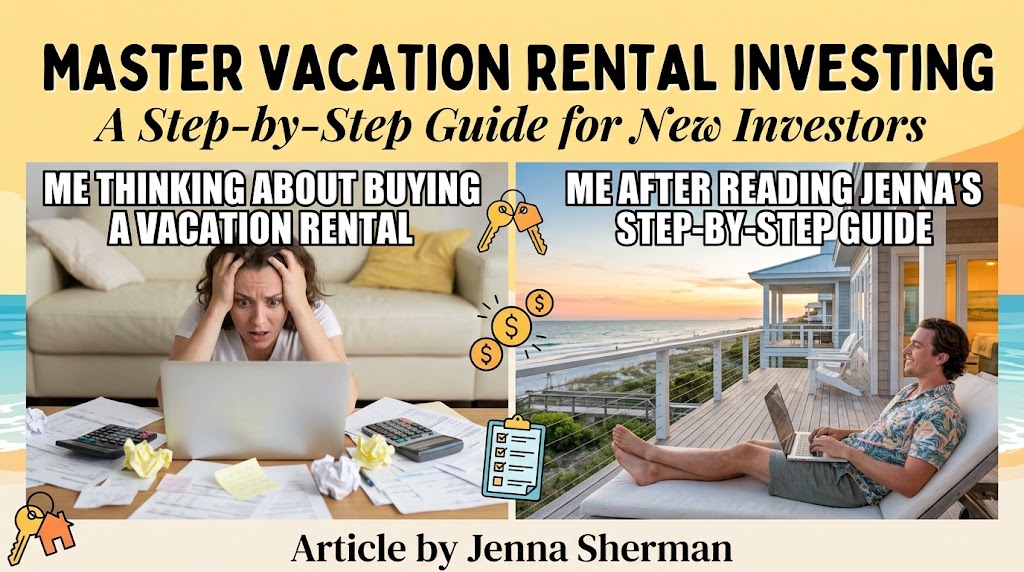
For first-time vacation rental investors, especially parents balancing long-term security with limited time, the short-term rental market can look like a fast track to real estate wealth building. The core tension is simple: vacation rental investment opportunities can produce strong income, but investment property challenges, seasonality, guest expectations, local rules, and operational complexity, can erase gains just as quickly. A first property often succeeds or fails based on disciplined decisions before purchase and realistic standards for what “passive” actually means. With eyes wide open, a first vacation rental can become a stable, repeatable wealth-building asset.
Build Your First Vacation Rental, Start to Sustainably
This process helps you go from “maybe we should buy a vacation rental” to running a property that earns consistently without consuming every weekend. For busy parents, the goal is simple: make fewer big mistakes by following a clear order of operations.
● Step 1: Validate a market before you shop for homes
Start with demand and rules, not pretty listings: check seasonality, average nightly rates, typical occupancy, and local short-term rental requirements. Use a quick “stress test” by estimating income for slow months, not peak weeks, so your budget can survive the off-season.
● Step 2: Buy the right deal, not the perfect house
Choose a property that fits a clear guest profile and a manageable setup, such as fewer bedrooms to clean or a layout that reduces maintenance surprises. During acquisition, confirm financing, run a conservative repair budget, and negotiate inspection items so your first year is not consumed by catch-up projects.
● Step 3: Upgrade only what improves photos, comfort, and reviews
Prioritize improvements that reduce complaints and increase booking appeal: reliable HVAC, strong Wi-Fi, durable flooring, simple storage, and a kitchen stocked for real use. Then add “memory makers” for guests since artwork and comfortable soft furnishings can help your listing feel distinct and more bookable.
● Step 4: Set dynamic pricing and a simple marketing flywheel
Start with a base price that covers your true costs, then adjust weekly based on day of week, season, and local events so you are not guessing. Keep marketing repeatable: strong photos, a clear headline, a short list of benefits for your ideal guest, and fast responses that turn inquiries into bookings.
● Step 5: Build day-to-day operations you can sustain
Decide what you will do yourself versus outsource, then document it as checklists for cleaning, restocking, and quick fixes so anyone can step in. Protect your time by standardizing guest messages, setting clear house rules, and using a consistent turnover routine that includes communicating the process for departures and inspections.
Run Your Rental Like a Business to Scale Past One Property
Once you’ve learned how to choose, set up, and operate a vacation rental day to day, the next leap is treating it like a real company, not a side project. A vacation rental can build wealth faster when you approach it as a business in addition to a real estate purchase. That mindset pushes you beyond “buy a property and hope it performs” and into decisions that protect you and support long-term growth, like thinking through liability protection, keeping financial records organized, and making plans with the future in mind. In practice, that means creating a clear separation between your household money and the property’s money, so you can see what the rental truly earns and avoid mixing personal and business expenses.
Establishing a formal business structure can reinforce that separation while giving you a sturdier foundation for managing rental properties over time. It’s a practical step toward consistency: your finances are easier to track, your responsibilities are clearer, and you’re set up to expand thoughtfully rather than reactively. If you want a straightforward resource on the business side of rental property investing, it can help you connect the dots between ownership and operations.
Vacation Rental Investing Questions, Answered
Q: What are the biggest risks with a first vacation rental purchase?
A: The main risks are overestimating demand, underestimating expenses, and buying in an area where rules can change. Protect yourself by underwriting conservatively, budgeting for repairs and slow months, and choosing a property that could still work as a long-term rental if needed.
Q: How do I handle seasonality so cash flow does not dry up?
A: Plan for “off” months before you buy by modeling income using low-season rates and lower occupancy. Build a cash reserve, add midweek discounts, and market to off-season guests like remote workers or visiting families.
Q: What financing options can I use if I am not paying cash?
A: Many first-time buyers start with a conventional loan on a second home if they meet occupancy requirements, or an investor mortgage if it is strictly a rental. Ask lenders to quote both and compare rate, down payment, and reserve requirements before you commit.
Q: How worried should I be about local regulations and permits?
A: Take it seriously because it can affect income overnight. Data showing 47% reported operating under strict permitting is a reminder to verify zoning, licensing, taxes, and HOA rules in writing before closing.

Vacation Rental Wealth-Building Checklist
This vacation rental investment checklist keeps your first deal parent-friendly and predictable, so you avoid expensive surprises. Use it to turn pre-purchase due diligence into repeatable habits from closing through your first bookings.
✔ Confirm realistic occupancy and rates using conservative, low-season assumptions
✔ Review all recurring expenses, including utilities, supplies, repairs, and replacements
✔ Verify zoning, permits, taxes, and HOA rules in writing before closing
✔ Compare loan options side-by-side for rate, down payment, and reserve requirements
✔ Set a cash buffer for slow months, refunds, and unexpected maintenance
✔ Prepare a property preparation checklist for safety, locks, linens, and a photo-ready setup
✔ Launch marketing launch steps with clear listing photos, rules, pricing, and automated messaging
✔ Screen guests using a simple tenant screening checklist and documented house rules
Check these off, and you will move from guessing to owning with confidence.
Turn Your First Vacation Rental Into Long-Term Wealth
Buying a first vacation rental can feel like a tug-of-war between the promise of cash flow and the fear of costly mistakes. A checklist-driven, repeatable process, clear numbers, disciplined due diligence, and thoughtful launch planning, keeps decisions grounded and confidence high. Follow that approach and the vacation rental investment benefits become more predictable: steadier income, a growing asset, and a clearer path to building long-term wealth through ownership. Run the numbers, follow the checklist, and let the property earn trust over time.